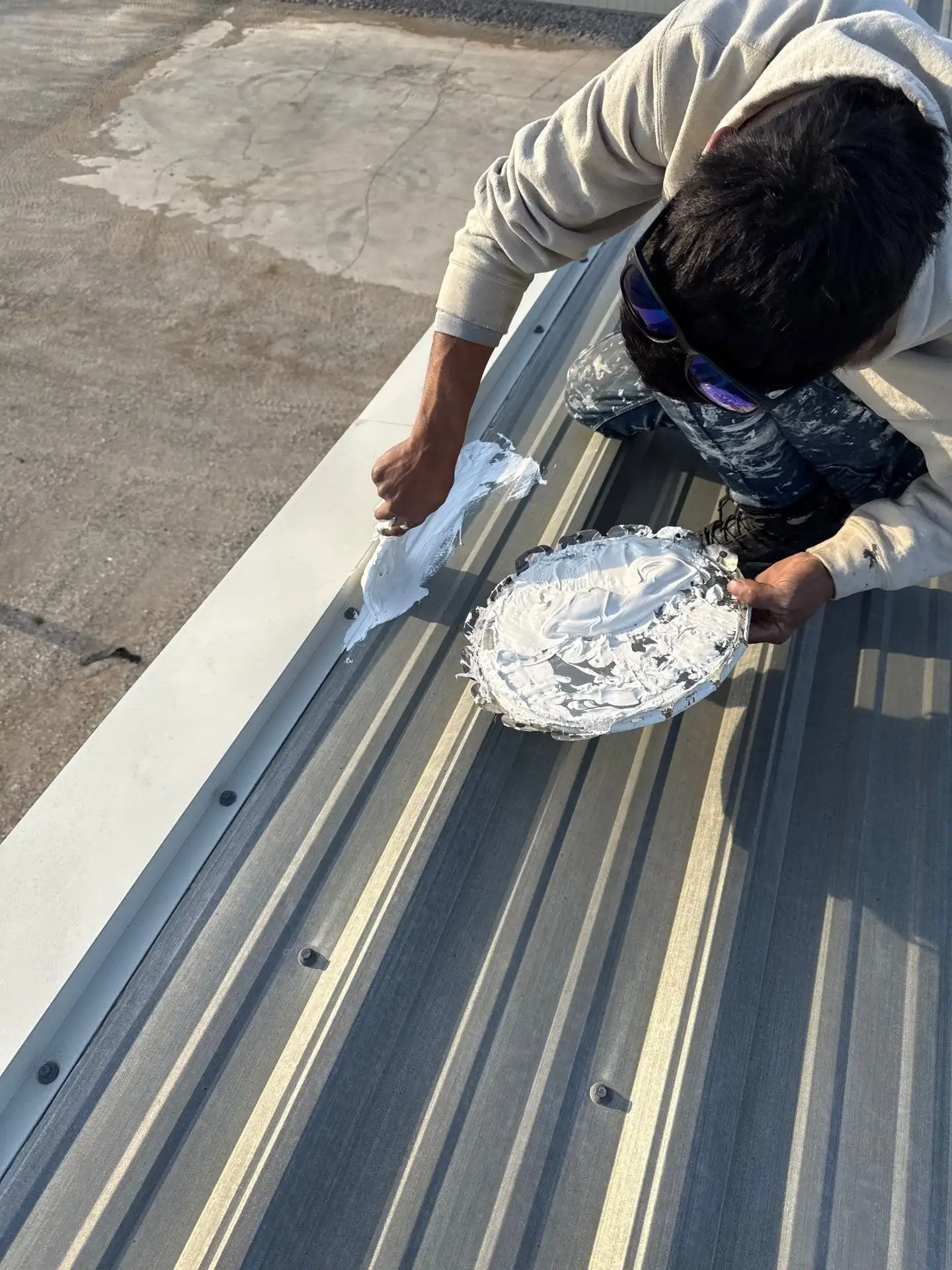
Problem: Seams Are Lifting and Pulling Apart
EPDM does not leak through the field of the membrane very often. It leaks at the seams. Older roofs in Britton Ridge were installed with seam tape or adhesive that has a real shelf life, usually fifteen to twenty years. Heat cycling, UV, and ponded water break down the bond. You will see the edge of the seam curling up, fishmouths where the tape has released, or a visible gap you can slide a putty knife into.
Solution: Clean, Prime, and Re-Seam
A proper seam repair is not a tube of caulk. Our crews scrub the membrane with a splice cleaner to remove oxidation and dirt, then apply EPDM primer and a six inch cover strip of uncured flashing centered over the failed seam. The patch is rolled with a seam roller to push out air. Done right, this repair lasts the rest of the roof's service life. If we find that more than thirty percent of seams are failing, we will say so honestly, because at that point a recoat or replacement is the smarter spend. For a broader look at when patching stops making sense, our piece on when to coat versus replace your commercial roof lays out the decision points. We also document each seam repair with before and after photos, which helps facility managers track membrane condition year over year and budget for the eventual recoat without surprises.
Problem: Punctures From Foot Traffic and Debris
EPDM is tough but not invincible. HVAC techs walking across the roof with tool bags, a dropped screwdriver, hail, or a tree branch from a Britton Ridge storm will all punch through the membrane. Sometimes the hole is obvious. More often it is a slit under a leaf pile or a star fracture under a rooftop unit you would never find without lifting equipment.
Solution: Locate, Cut Clean, and Patch
We find punctures three ways: visual inspection of high traffic zones, infrared scanning to identify wet insulation below, and water testing around suspect areas. Once located, the membrane gets cleaned, primed, and patched with a cured EPDM patch sized at least two inches larger than the damage on all sides. If the insulation underneath is saturated, the patch alone is not enough. We cut out the wet section, replace the insulation, and re membrane the area. Skipping that step traps moisture and grows a much bigger problem. For roofs with heavy mechanical traffic, we often recommend installing walk pads in the lanes between rooftop units. A roll of protection mat costs a fraction of one puncture repair and prevents the same hole from being punched again next quarter when the filter change crew comes back.
Problem: Flashing Failures at Penetrations and Walls
Most rubber roof leaks we trace in Britton Ridge do not start in the field. They start at a pipe boot, a curb, a drain bowl, or where the EPDM turns up a parapet wall. Sealants shrink, termination bars loosen, and pitch pans dry out and crack. Our walkthrough on roof leak origin detection versus repair covers why finding the true entry point matters more than chasing stains on the ceiling below.
Solution: Rebuild the Detail, Do Not Just Reseal
When a pipe boot is cracked, we install a new pre molded EPDM boot, not another bead of mastic. When a termination bar has pulled away from a parapet, we remove it, install fresh membrane up the wall, re fasten with new bar and anchors, and seal the top edge with water cutoff mastic and counterflashing. Pitch pans get cleaned out and refilled with pourable sealer rated for ponding water. These details are unglamorous but they are where rubber roofs live or die.
Problem: Drains and Scuppers Are Backing Up
Ponding water is the slow killer of EPDM. When internal drains clog with leaves and gravel, or scupper openings get blocked by ice or debris, water sits on the membrane for days. UV exposure combined with standing water accelerates seam breakdown and stresses every penetration on the roof. In Britton Ridge, we see this most often after fall leaf drop and after spring storms that wash roof aggregate toward the drains.
Solution: Clear, Inspect, and Add Sumps Where Needed
We clear the drain bowls, replace cracked strainers, and check that the drain ring is still compressed tight against the membrane. If a low spot keeps refilling, we can build up the surrounding insulation with tapered board to redirect flow, or install a tapered sump around the drain to pull water off the field faster. Documenting drainage during the same visit as the leak repair is the difference between a one time fix and a roof that keeps calling you back.
Problem: Interior Water Damage Has Already Started
By the time you call, the leak has often soaked drywall, ceiling tiles, insulation, or stored product. The roof repair is only half the job. If the wet materials stay in place, you get mold inside of forty eight to seventy two hours.
Solution: Dry the Building While We Fix the Roof
Because Britton Ridge Metal Roofing handles both roofing and water mitigation, we can tarp or dry in the active leak, then start extraction and drying on the interior the same visit. Our process for attic water damage from roof leaks shows how that coordinated approach prevents the secondary damage that drives claim costs up. Steps we take on the inside:
- Extract standing water and remove saturated ceiling tiles or insulation.
- Set air movers and dehumidifiers, then monitor moisture readings daily until dry.
- Document everything for your insurance carrier with photos and moisture logs.
Severity is assessed over the phone when you call, and an inspection is scheduled fast so the roof gets stabilized before the next rain. That single coordinated visit, one crew handling both the membrane and the wet interior, is usually what keeps a Britton Ridge EPDM leak from turning into a much larger restoration project.